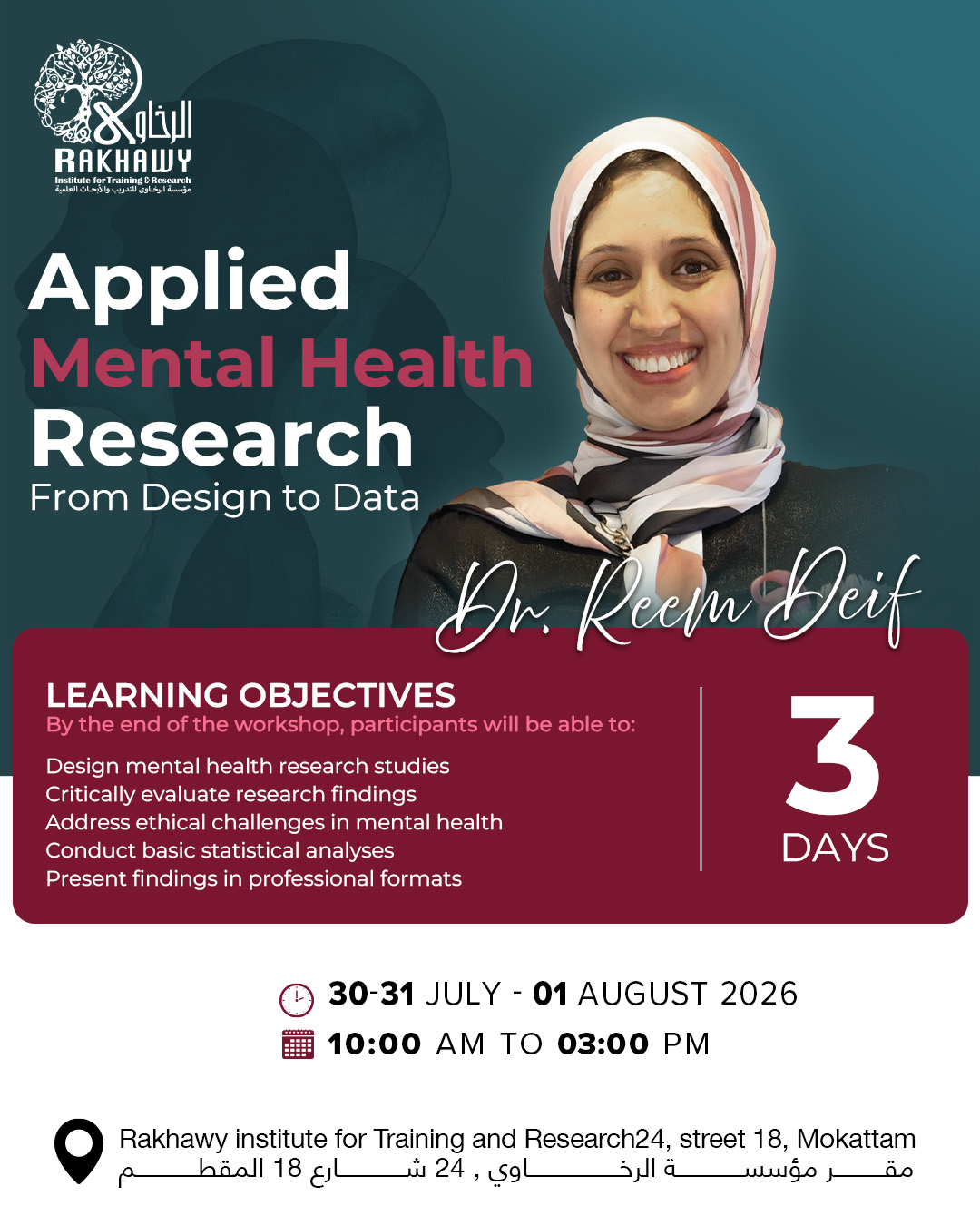
البحث التطبيقي في الصحة النفسية من تصميم الدراسة إلى تحليل البيانات
الوقت: من الساعة 10:00 صباحًا إلى 3:00 مساءً
نظرة عامة على البرنامج:
تم تصميم هذا التدريب المكثف لمدة 3 أيام لتزويد المشاركين بالمهارات الأساسية اللازمة لتصميم وتنفيذ وتقييم الأبحاث في مجال الصحة النفسية بشكل نقدي. يجمع البرنامج بين الوضوح المفاهيمي والتطبيق العملي، ويتجاوز الجانب النظري لمساعدة المشاركين على التعامل بثقة مع البحث في الواقع العملي.
سيخوض المشاركون تجربة تعليمية تفاعلية قائمة على التطبيق، حيث يعملون عبر جميع مراحل العملية البحثية—من صياغة الأسئلة إلى تفسير البيانات—مع التوقف عند التعقيدات الأخلاقية الخاصة بأبحاث الصحة النفسية.
يرتكز البرنامج على ثلاثة محاور متكاملة:
- تصميم البحث
- أخلاقيات البحث في الصحة النفسية
- التحليل الإحصائي
عن المُدرِّبة:
د. ريم ضيف
أستاذ مساعد غير متفرغ في قسم علم النفس بالجامعة الأمريكية بالقاهرة
، أخصائية نفسية إكلينيكية وباحثة وأكاديمية متخصصة في الصحة النفسية والصحة العامة. حصلت على درجة الدكتوراه في العلوم التطبيقية مع تخصص في الصحة العامة العالمية، كما تحمل درجة الماجستير في الإرشاد النفسي من الجامعة الأمريكية بالقاهرة، حيث ركّز بحثها على التفاعل بين العوامل البيولوجية والنفسية والبيئية في الاكتئاب داخل السياق المصري.
تجمع د. ضيف بين الخبرة الإكلينيكية والتدريب البحثي المتقدم، ولديها سنوات من الخبرة في العلاج النفسي، والتدريس، وقيادة المبادرات البحثية. نُشرت أعمالها في مجلات دولية مرموقة مثل Frontiers in Psychiatry وInternational Journal of Environmental Research and Public Health، وتشمل اهتماماتها البحثية الاكتئاب، والصحة النفسية الدقيقة، وعلم النفس العصبي الحيوي، والصحة النفسية في فترة ما حول الولادة.
الفئة المستهدفة:
هذه الورشة مفتوحة لمجموعة واسعة من المهتمين بالبحث في الصحة النفسية، بما في ذلك:
- الأخصائيون النفسيون والأطباء النفسيون
- الباحثين في مجال الصحة العامة
- الأخصائيون في علم النفس المجتمعي
- الأخصائيون الاجتماعيون والمرشدون
- الطلاب والباحثون في بداية مسيرتهم المهنية
لا يُشترط وجود خلفية متقدمة في الإحصاء، ويكفي الإلمام الأساسي بمفاهيم البحث العلمي.
يشترط توفر جهاز لابتوب شخصي خلال ساعات التدريب.
أهداف التعلم:
بنهاية الورشة، سيتمكن المشاركون من
١. تصميم دراسات بحثية في الصحة النفسية تراعي السياق المحلي
٢. تقييم المناهج والنتائج البحثية بشكل نقدي في السياقات العلمية والتطبيقية
٣. التعرف على التحديات الأخلاقية الخاصة بالفئات النفسية والتعامل معها
٤. إجراء وتحليل الإحصاءات الأساسية باستخدام بيانات حقيقية
٥. عرض النتائج البحثية بوضوح وفق معايير مهنية
منهجية التدريبك:
- محاضرات تفاعلية مدعومة بأمثلة واقعية
- عمل جماعي وتعلم تعاوني
- تمارين تطبيقية وتطوير مشاريع صغيرة
- التركيز على التفكير النقدي بدلاً من حفظ المعادلات
- بيئة داعمة لمشاركين من خلفيات متنوعة
Applied Mental Health Research: From Design to Data
PROGRAM OVERVIEW
This intensive 3-day training is designed to equip participants with the essential skills to design, conduct, and critically evaluate research in mental health. Blending conceptual clarity with hands-on application, the program moves beyond theory to help participants confidently navigate real-world research.
Participants will engage in an interactive, practice-oriented learning experience, working through the full research process—from formulating questions to interpreting data—while reflecting on the ethical complexities unique to mental health research.
The program is structured around three integrated tracks:
- Research Design
- Ethics in Mental Health Research
- Statistical Analysis
ABOUT THE TRAINER
Dr. Reem Deif, Adjunct Assistant Professor of Psychology, The American University in Cairo
Dr. Reem Deif is a clinical psychologist, researcher, and educator specializing in mental health and global public health. She holds a PhD in Applied Sciences with a specialization in Global Public Health and a master’s degree in Counseling Psychology from the American University in Cairo (AUC), where her research focused on the intersection of biological, psychological, and environmental factors in depression within the Egyptian context.
Dr. Deif brings a unique integration of clinical expertise and advanced research training, with several years of experience working in psychotherapy, teaching, and leading research initiatives. Her work has been published in leading international journals, including Frontiers in Psychiatry and International Journal of Environmental Research and Public Health, with research interests spanning depression, precision mental health, psychoneurobiology, and perinatal mental health.
TARGET AUDIENCE
This workshop is open to a wide range of participants interested in mental health research, including
- Psychologists and psychiatrists
- Public health researchers
- Community psychologists
- Social workers and counselors
- Students and early-career researchers
No advanced statistical background is required, only a basic familiarity with research concepts is helpful.
Access to personal laptops during the program training hours is required.
LEARNING OBJECTIVES
By the end of the workshop, participants will be able to:
- Design contextually relevant mental health research studies
- Critically evaluate research methods and findings in scientific and applied settings
- Identify and address ethical dilemmas specific to mental health populations
- Conduct and interpret basic statistical analyses using real datasets
- Communicate research findings clearly in professional formats
TRAINING APPROACH
- Interactive lectures with real-world examples
- Group work and collaborative learning
- Applied exercises and mini-project development
- Emphasis on critical thinking over memorization of formulas
- Supportive environment for participants from diverse backgrounds